Grant, Cary
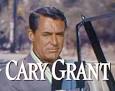
[real name Archibald Alec Leach]
(1904–1986), actor, was born on 18 January 1904 at 15 Hughenden Road, Bristol,
the only surviving child of Elias Leach, a tailor's presser, and his wife,
Elsie Maria, née Kingdon , daughter of a shipwright. An elder brother
had died before he was born. He became one of the wealthiest and most famous
Hollywood film stars of the mid-twentieth century, making seventy-two feature
films between 1932 and 1966. A dark, handsome man well over 6 feet tall with
thick, wavy hair and an attractively cleft chin, he was a romantic comedian,
suave and well dressed, ironic, jaunty, and a touch caustic, but very, very
funny. The world accepted this relaxed figure as the real person, and to his
many friends he was an amusing and generous individual. But the image was
carefully cultivated, and behind it was a complex and troubled man.
The Leach household was not happy and when Archie Leach was nine his mother was
suddenly committed to a mental institution. Nobody told the boy what had
happened to her and in time he came to believe that she was dead. The sense of
abandonment deeply affected his character and left him with a lack of trust
which was to ruin all but one of his many marriages and love affairs. He was a
lonely child, hanging around backstage doing odd jobs at the local music-halls.
Stagestruck, he left school at fourteen and joined a troupe of boy acrobats,
stilt walkers, and slapstick comics called Bob Pender's Knockabout Comedians.
With them he toured the British music-halls, learning physical skills and a
sense of timing which never left him. In 1920 they went to America for a long
run at the huge New York Hippodrome, followed by a tour of large American
cities. Pender returned to England in the early 1920s but Leach and some of the
other men stayed on and ran their own troupe for several years. He later told
colourful stories about the strange jobs he had during the next few years. Always
a charmer, he soon became welcome in New
York theatrical circles and appeared in musical shows for both the Hammersteins
and the Shuberts. As he grew more sophisticated he acquired mannerisms which
became characteristic of him— including the well-timed double take, the
quizzically raised eyebrow—and modified his working-class accent to one all his
own, clipped and jerky but apparently acceptable to American ears as typically
British. A screen test at Paramount's small New York studio was not a success
but his first film, later shown as Singapore Sue, was made there in
1931. He went to Hollywood, where his good looks, charm, and useful contacts
easily got him a five-year contract with Paramount, and in 1932 he assumed the
more elegant name of Cary Grant. He legally adopted the name in December 1941.
Between 1932 to 1936 Paramount used Grant in over twenty films as well as
lending him to other companies. He played opposite many well-known stars but
the films, although good experience, were stereotyped and undistinguished. To
Grant's frustration Paramount made no attempt to promote him as they promoted
their big star Gary Cooper. However, his appearance in a star vehicle with
Marlene Dietrich and two more with Mae West drew attention to him, and the
talented director George Cukor borrowed him to play opposite Katharine Hepburn
in Sylvia Scarlett (1935). Although this film was a failure, Cukor's
sympathetic direction enabled Grant to explore a style of his own and it was a milestone
in his development.
In February 1934 Grant married a young
actress, Virginia Adler (1908–1996), daughter of James Edward Cherrill, and
former wife of Irving Adler. The marriage rapidly fell apart and ended in a
bitter divorce the next year. Grant returned to the apartment he had previously
shared with a fellow Paramount actor, Randolph Scott. This convenient bachelor
arrangement was not uncommon at the time but led to talk of bisexuality.
Whatever the truth, Grant's desire for a happy marriage was to prove one of the
driving forces of his life. During a pause in his work for Paramount in 1935 he
made a film in England with the actress Mary Brian, with whom for a while he
contemplated a second marriage. About this time his father died and he was able
to settle his mother, whose whereabouts he had discovered, in a house of her
own. He was to visit her many times until her death in 1973.
As his reputation grew, Grant decided to leave Paramount and in future
negotiate his own contracts for single films or groups of films. He refused to
renew his contract in the autumn of 1936, a brave move at the height of the
studio system. From then on he was to insist on a share of the box-office take
on top of a guaranteed fee. His next film, Topper (1937), in which he
made a debonair appearance as a ghost, was made at MGM and was such a
box-office hit that Columbia and RKO eagerly signed overlapping contracts with
Grant. By the middle of the war he had made some twenty films for them, more or
less on his own terms. He worked with some of the best directors in Hollywood,
including, Howard Hawks, Frank Capra, and George Stevens. The Awful Truth
firmly established him in 1937 as a leading comedy actor. Bringing up Baby
(1938) and Holiday (1938) were other crazy comedies and Gunga Din
(1939), an enormous success, was an uproarious version of Kipling's story. His
screen image and comic timing were now so polished that success at the
box-office was assured, and his departure from Paramount was triumphantly
justified. A perfectionist, his apparently casual performances were achieved by
meticulous attention to detail.
When war broke out in 1939 Grant remained in Hollywood, reassured by the
British ambassador's comforting view that members of the expatriate community
were acting as their country's representatives. He became an American citizen
in June 1942. The citation for the king's medal for services in the cause of
freedom, awarded him in April 1947, was for his contributions to the British War
Relief Fund.
Grant continued to make films, mainly comedies, during the war. One which was
outstanding as both a critical and a commercial success was The Philadelphia
Story (1940) for MGM, and co-starring Katharine Hepburn. James Stewart
received an Oscar for his part in this film. Grant, on the other hand, had such
a relaxed comedy style that he hardly seemed to be acting at all and was taken
for granted by the academy. He was nominated as best actor for his next film,
the sentimental Penny Serenade (1941), but to his disappointment the
Oscar that year went to Gary Cooper. The black comedy Arsenic and Old Lace
(1942) was another tremendous commercial hit. His next film, Suspicion
(1941), was the first of four important collaborations with the English
director Alfred Hitchcock. Characteristically, Hitchcock saw more in Grant than
the urbane charmer. He detected a hidden side, guarded and even with a hint of
menace, and cast him as a man plotting to murder his wife. Both Grant and the studio
demurred and the ending was changed, but a teasing ambiguity remained, and the
film has probably had a greater appeal to later, more sophisticated generations
than it had at the time. Joan Fontaine won an Oscar as the wife, but as usual
Grant's unostentatiously perfect performance went unrewarded.
On 8 July 1942 Grant married a second time. His wife, Barbara Hutton,), was
heiress to the Woolworth fortune, and the extravagant and gregarious lifestyle
of a wealthy socialite was so much at variance with Grant's lack of security
that despite a real affection which lasted until her death in 1979 the marriage
could not survive, and ended sadly in 1945. Grant was deeply distressed by this
second failure and by his lack of recognition as an actor, and for a while his
work suffered.
It was Hitchcock who revitalized Grant with one of the best films of his
career, Notorious, in 1946. Again Hitchcock cast him as not entirely
straightforward, a cool intelligence agent using the woman he loved to entice
another man. The film, with Ingrid Bergman, had the usual Hitchcock suspense
and was much admired. Refreshed, Grant returned to making light comedies. Among
them, I was a Male War Bride (1949) was an uncharacteristically broad
comedy, with Grant in deliberately unconvincing drag, and rather surprisingly
was another huge box-office hit. In December 1949 Grant married for the third
time. Betsy Drake (b. 1923) was another young actress, an intelligent
and well-educated girl of wide interests. Desperately anxious to get this
marriage right, for a while they lived quietly and for some years Grant read
widely and made fewer films. It was through Betsy that he met a doctor who was
experimenting with the use of LSD to help patients solve their problems by
reliving their pasts. Grant attended a number of sessions and believed they had
been beneficial.
By 1950 Grant had been in films for nearly twenty years and his type of sophisticated,
screwball comedy was beginning to look dated as gritty realism took over. He
talked of retiring. Before long, however, he was again lured back by Hitchcock
and in 1954 filmed one of his most popular and glamorous films, the comedy
thriller To Catch a Thief (1955), with Grace Kelly. Far from retiring,
he continued to make films for another twelve years and, though fewer in number
and lacking some of the old sparkle, most of them made money. One made in Spain
in 1957 co-starred Sophia Loren, with whom he fell madly in love. This wrecked
his already faltering marriage to Betsy and he was devastated when Loren
married Carlo Ponti. Once more he was rescued from despair by Hitchcock with
the last of their four films together, one of Grant's best, the classic comedy
thriller with a chase, North by North West (1959). His third marriage
having ended in divorce in 1962, and 3 years later Grant married another young
actress, Dyan Cannon (born Samille Diane Friesen; b. 1939) , but despite
the welcome birth of his only child the marriage was no more successful than
the others and ended in 1968. In a lamentable last film, Walk, Don't Run
(1966), for the first time Grant did not get the girl.
At sixty-two Grant was still a vigorous and handsome man and had no intention
of becoming a silver-haired character actor. Without formally announcing his
retirement he simply turned his attention to other things. He had always been
interested in business and for some years he now pursued an active business
career which included directorships of MGM. In 1970 the Academy gave him the
survivor's consolation prize, an honorary award ‘for his unique mastery of the
art of screen acting, with the respect and affection of his colleagues’. Later
his films found new life on television and video, and as times changed a new
audience's perception of him shifted slightly. A hint of the hidden depths and
vulnerability could be detected behind the cool façade so carefully constructed
to divert attention from the uncertainty within.
During the last decade of his busy life Grant achieved married happiness at
last. He had met Barbara Harris (b. 1951), an English girl forty-seven
years his junior, in 1976 when she was a public relations consultant for
Fabergé, and after several years of passionate friendship they married in April 1981. As an old man with thick white
hair and undimmed charm he toured the small towns of America with a one-man
show called A Conversation with Cary Grant, reminiscing and chatting
with the audience. It was as he prepared for the show in Davenport, Iowa, in
November 1986 that he had a severe stroke. He died on 29 November 1986 at St
Luke's Hospital in Davenport.


